
Bogazici University Northern Campus Central Library
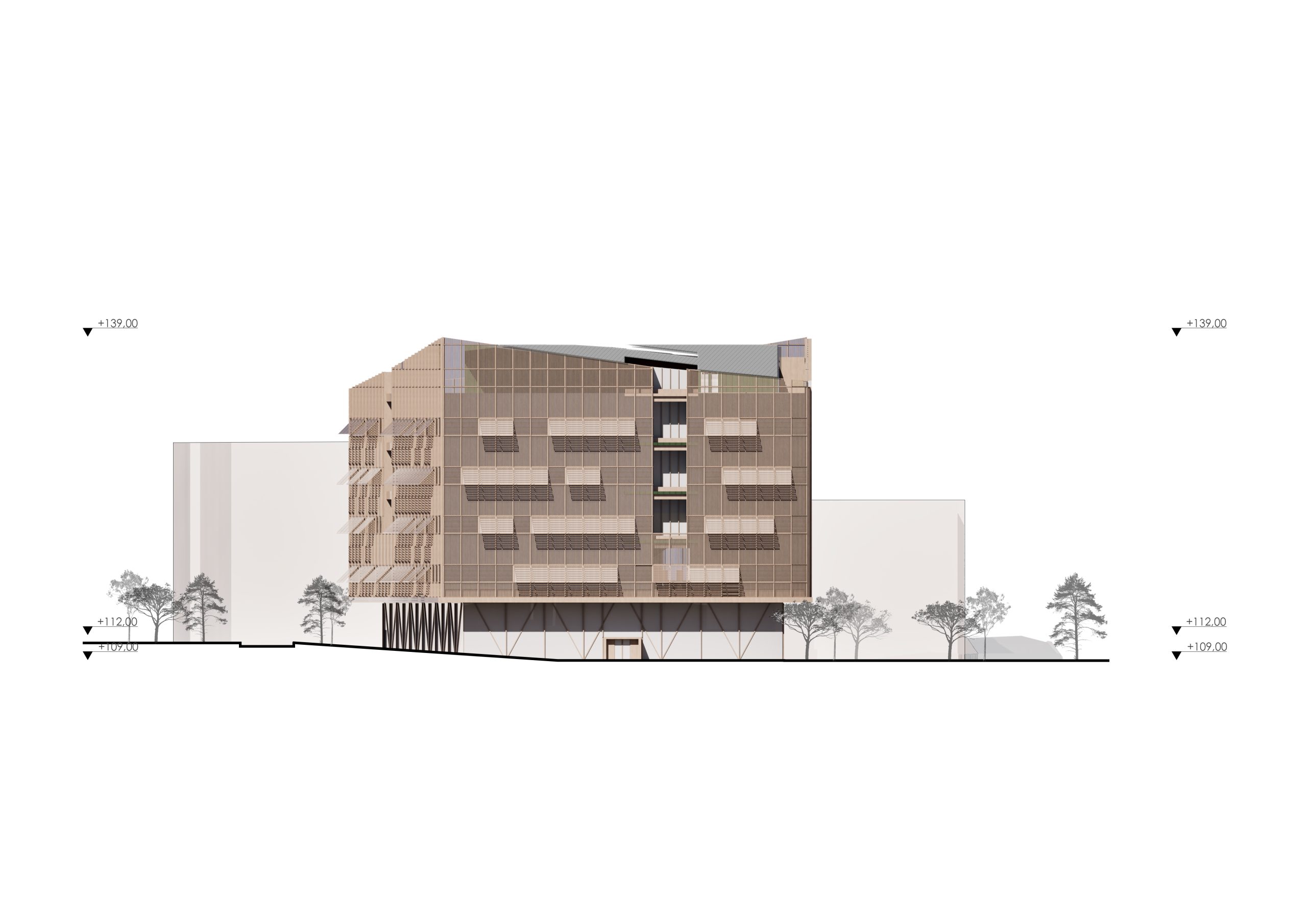
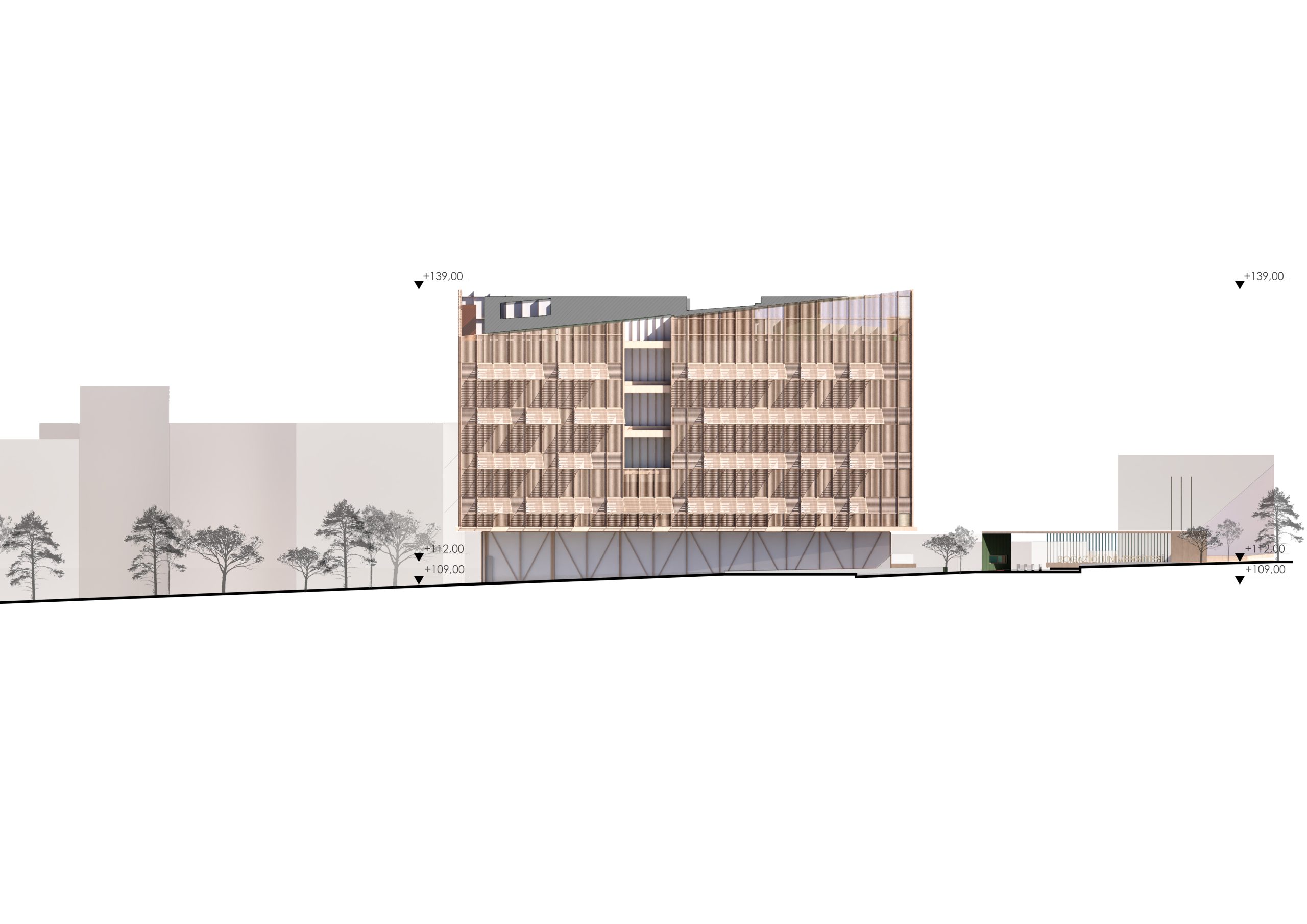
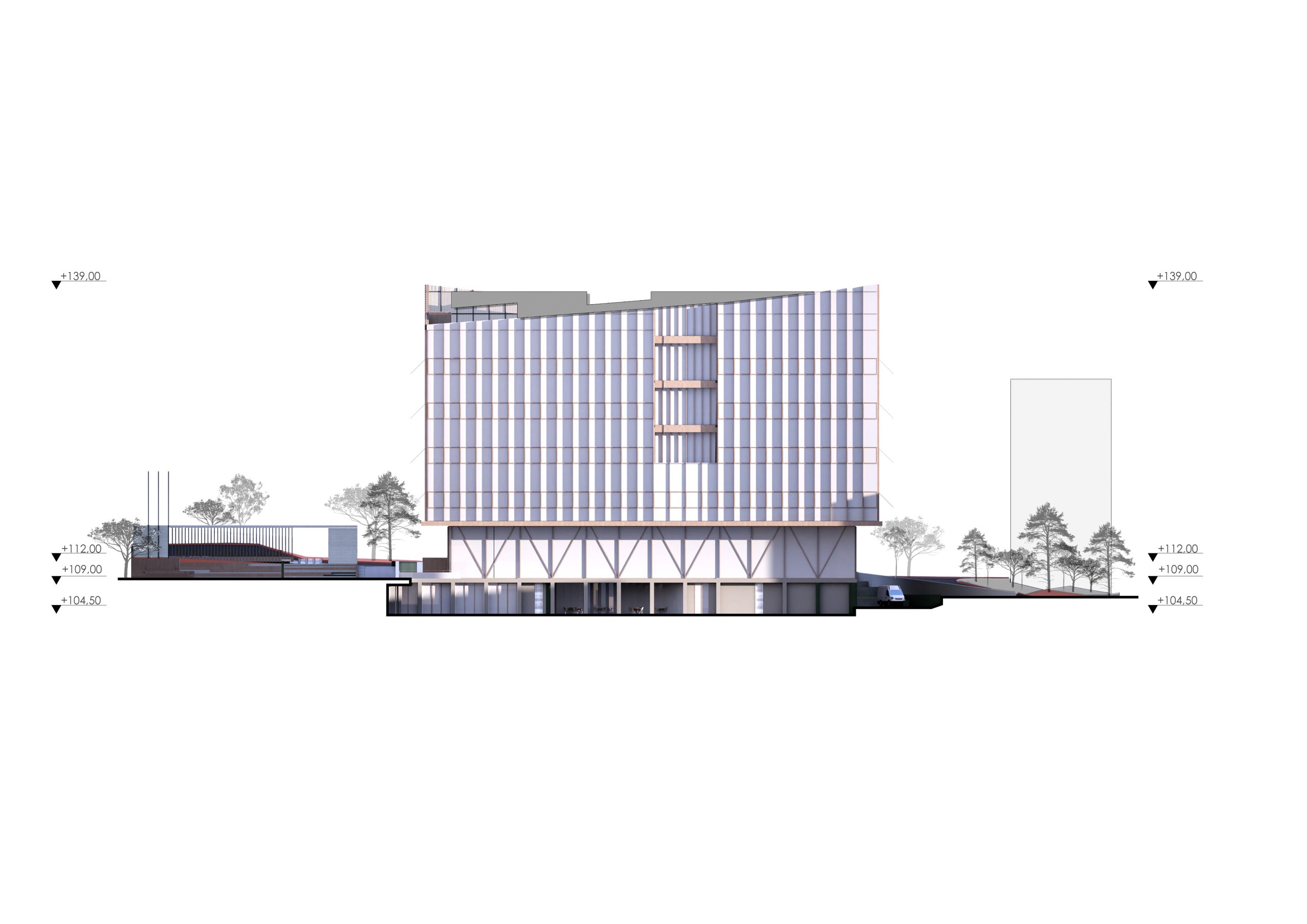
- Project Date: 2024
- Location: Bogazici University Northern Campus - İstanbul
- Client: Boğaziçi University Rectorate Construction Works
- Project Team: Sevinç Hadi - Tülin Hadi - Cem İlhan - Ayşegül Ersin - Almira Köker - Samed Özkökeli
- Typology:
- Education
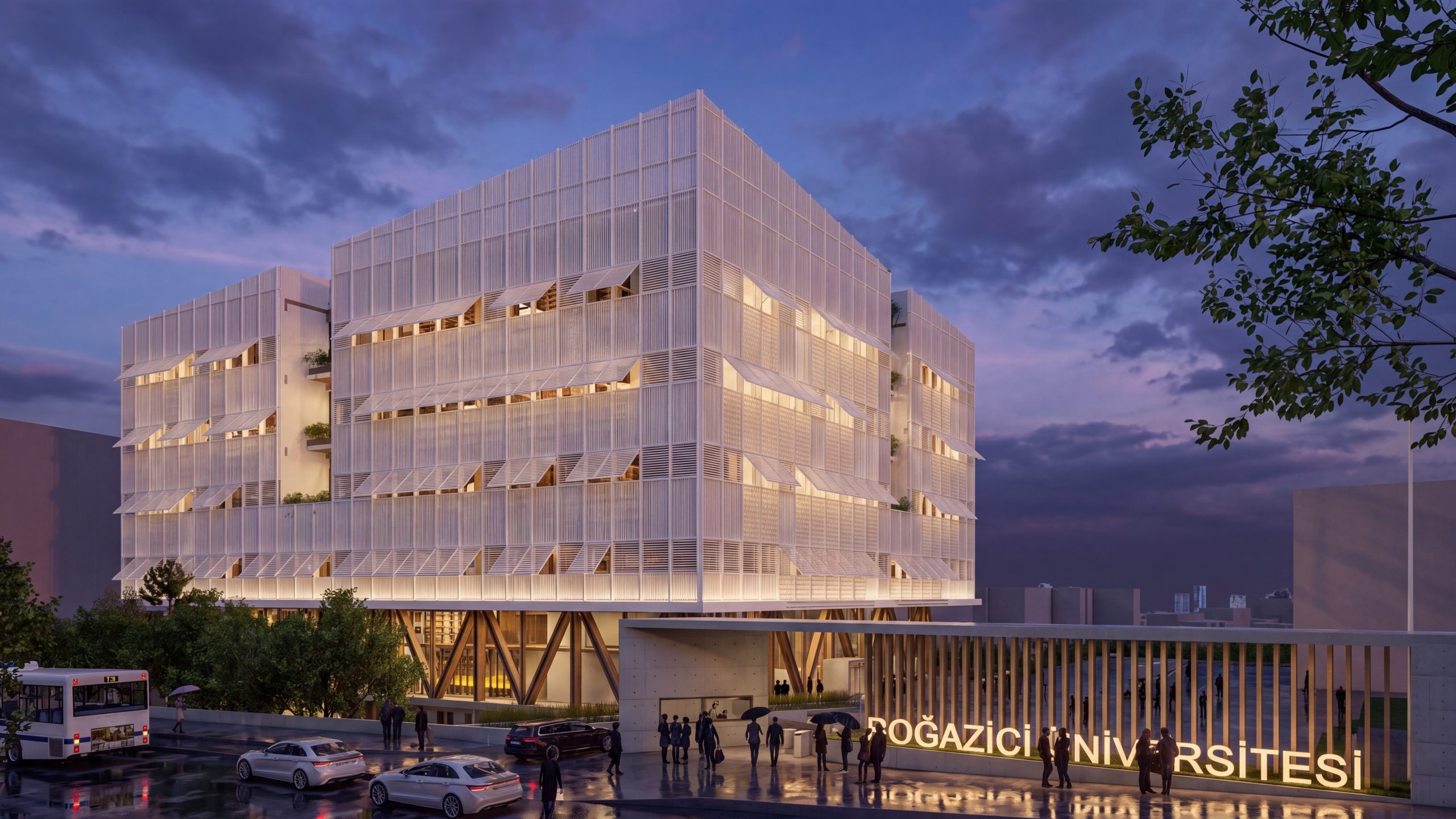
The Aptullah Kuran Library, located on Boğaziçi University’s North Campus, was identified as a risky structure and demolished in 2025. This project has been submitted upon the request of Boğaziçi University Rectorate’s Construction Works Department for a new library need in 2024.
General Approach
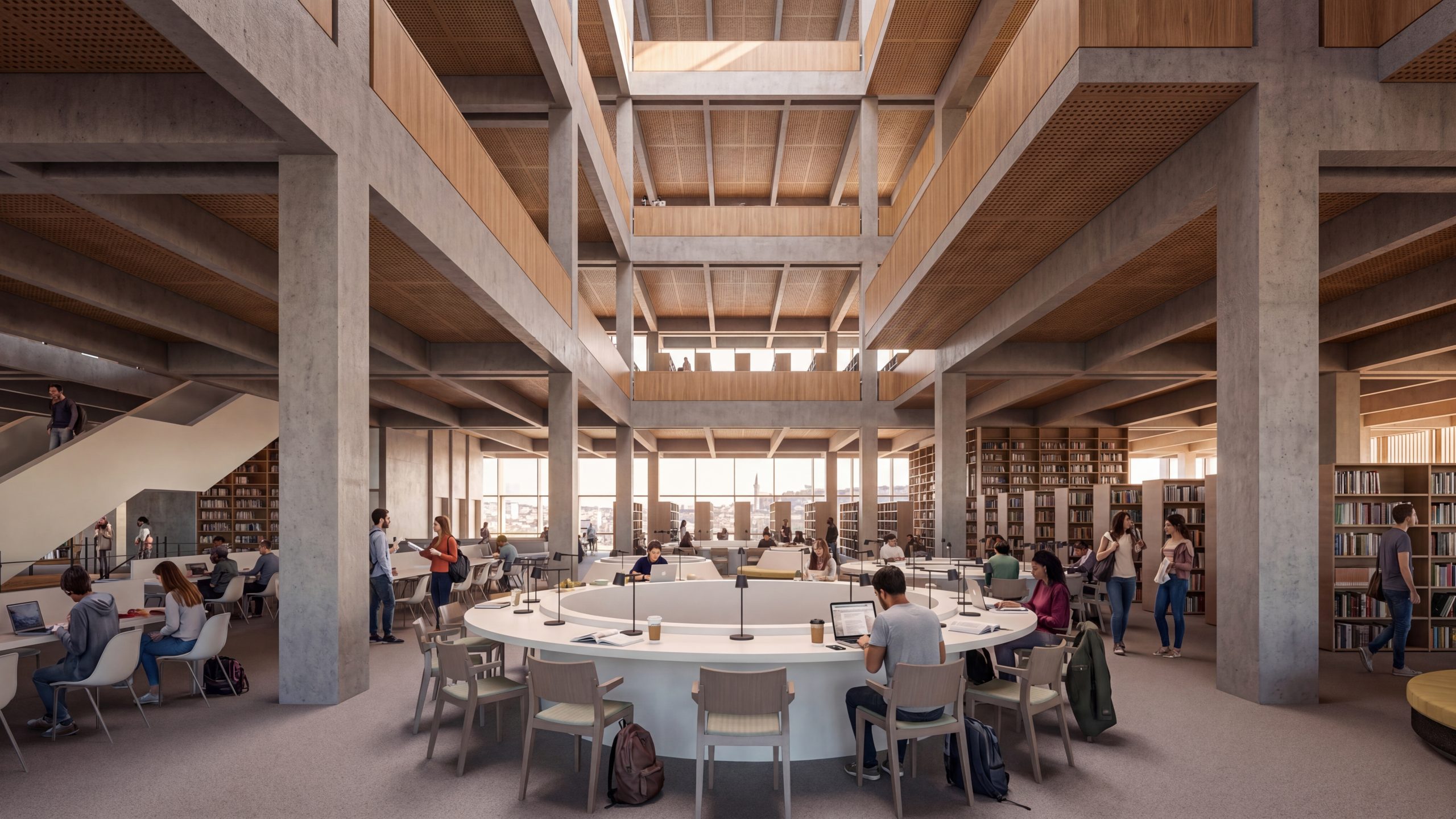
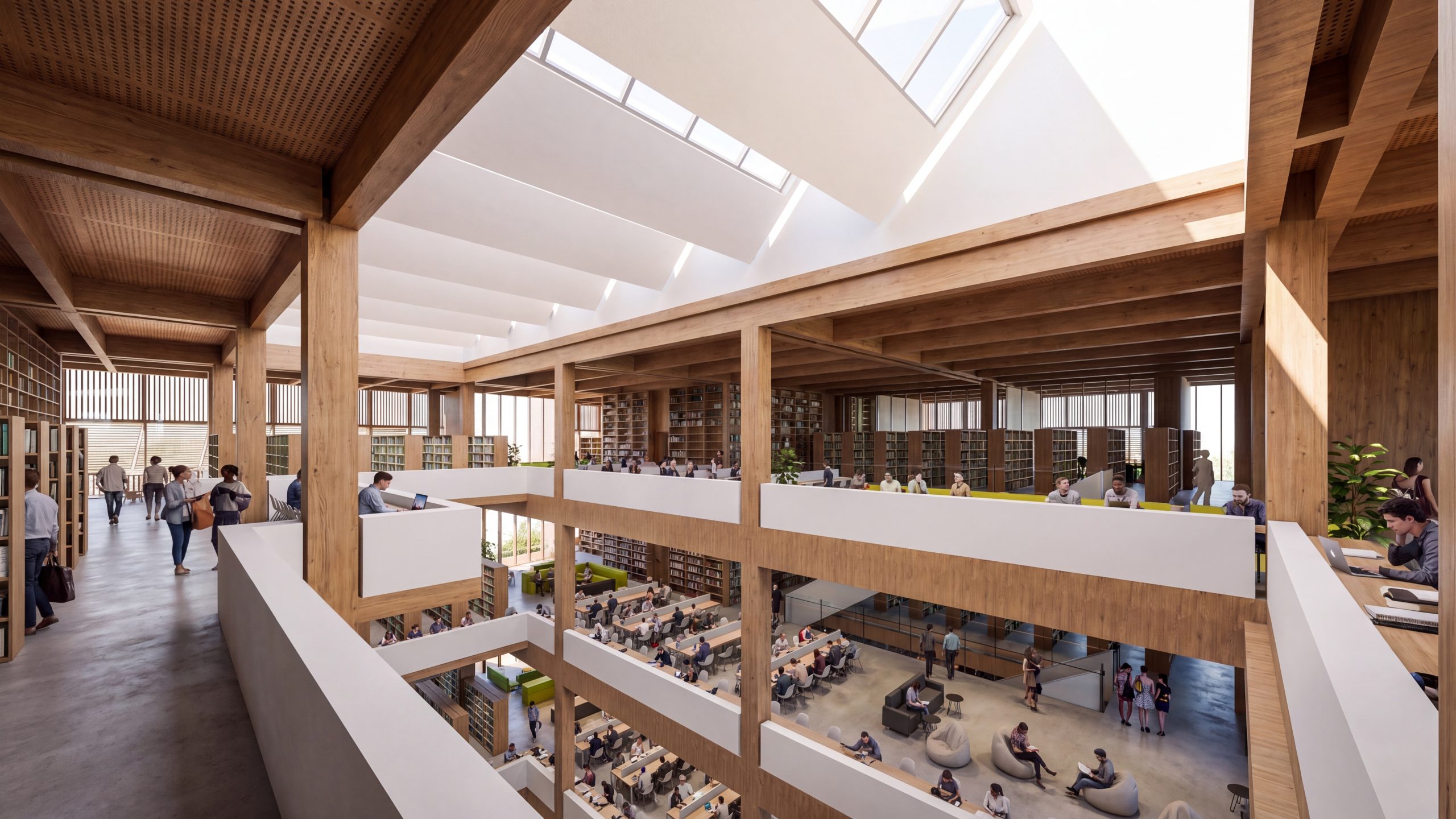
Designed between 1973-1975 and opened in 1980, the Boğaziçi University Aptullah Kuran Library has remained in the memory of all its users, both for its commanding location on the North Campus, welcoming visitors with tranquility, and for its central void and the spaces that connect it. The central void and the natural light that enters the entire space from the roof are the most important elements characterizing the library. In addition, the north-south oriented reading areas are another distinctive feature of the library. The library, intended to transform into a new generation “research center,” was designed with the aim of preserving the characteristic elements that have become ingrained in our memories, taking into account current needs and the construction system considered as an input to the design. The goal was to create a space that benefits from natural light throughout.
The building was designed to evoke concepts such as joy, hope, optimism, respect, greenery, peace, appreciation for what is valuable and universal, scale, fluidity, and simplicity. In three dimensions, continuities in memory, visual continuities, fluidity, flexibility, interior variety, and the effects of light are brought together to bring these concepts to life.
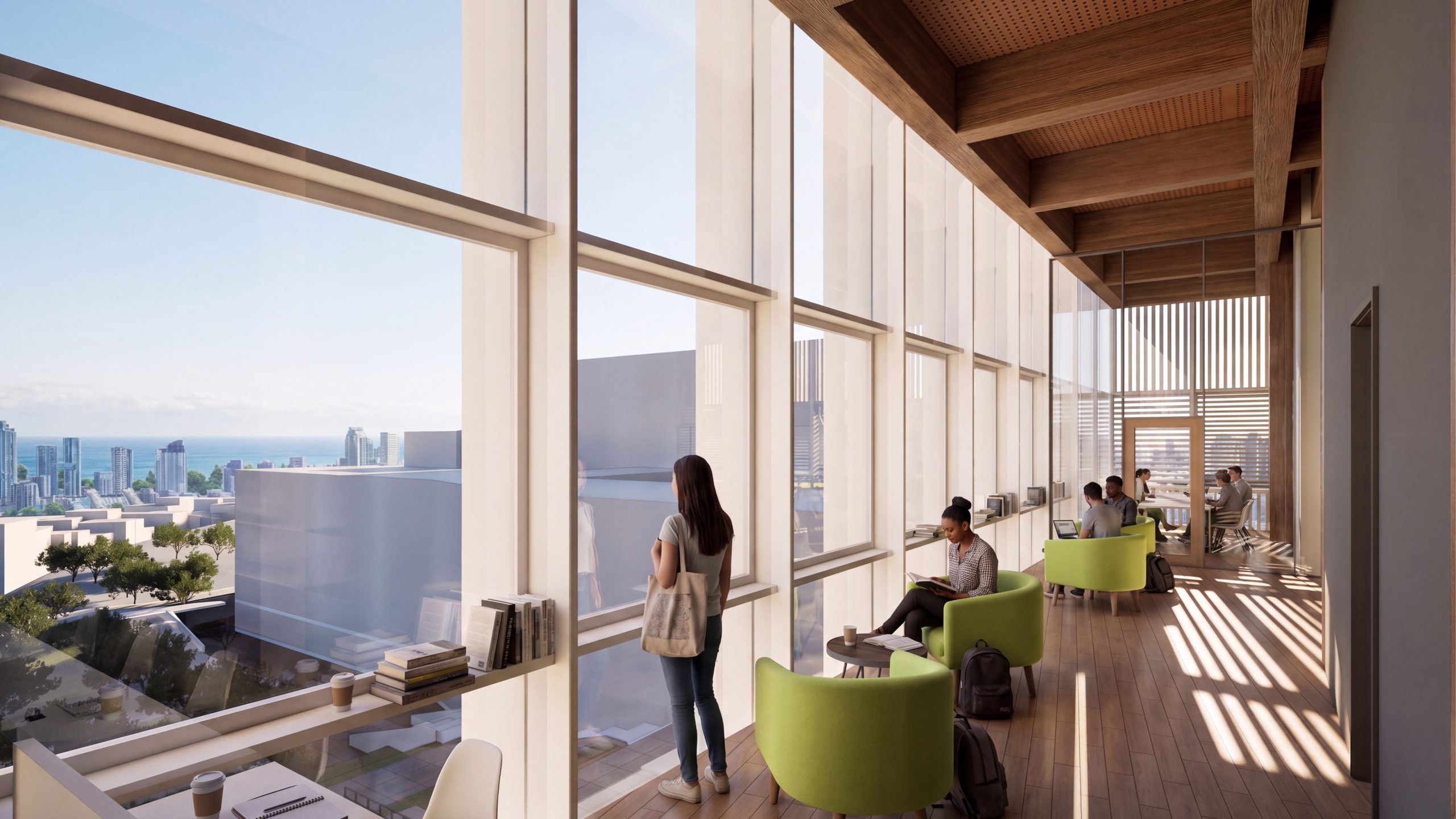
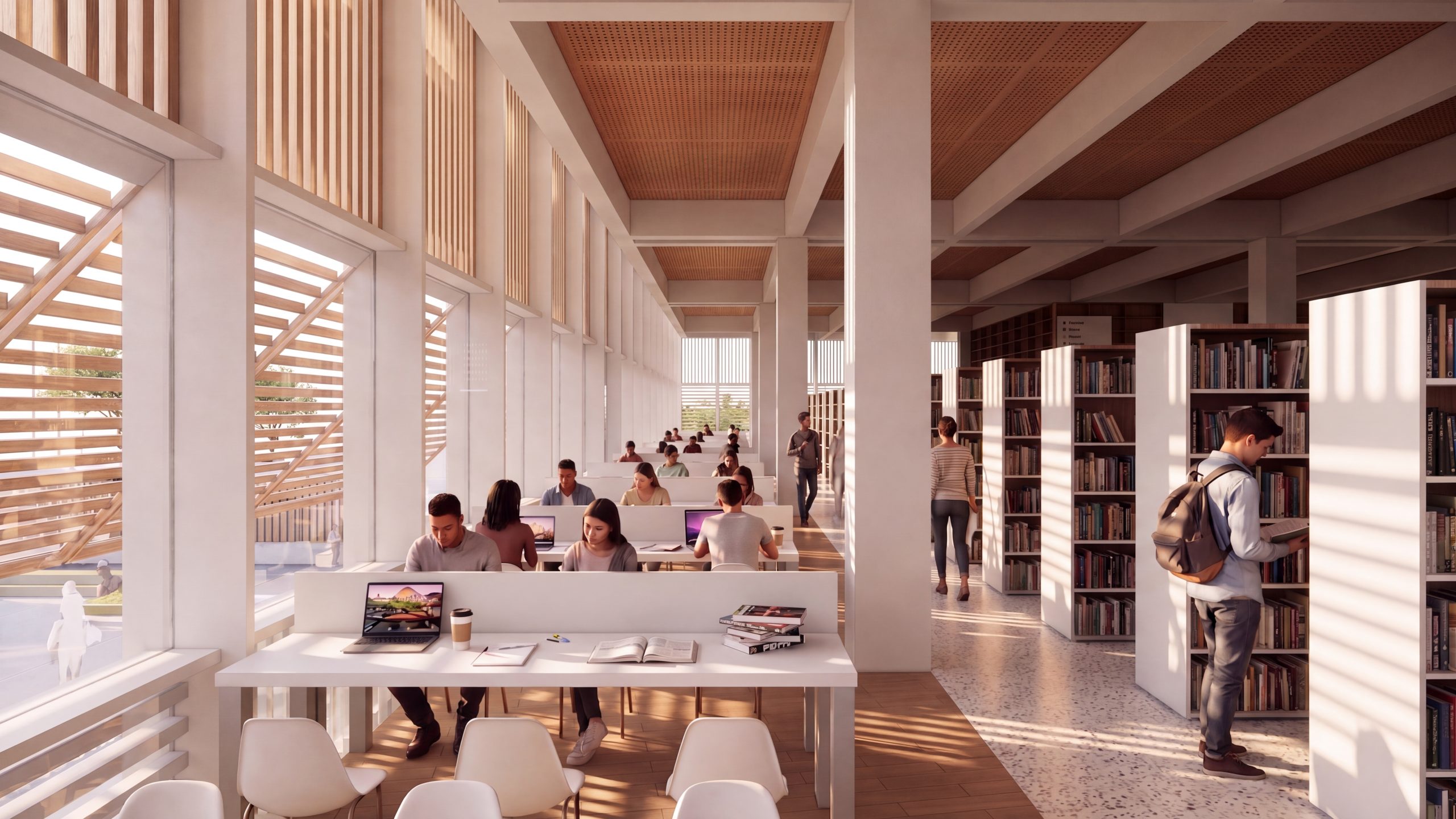
The building is entirely open to the function of reading books at a desk. One can take a book from the open shelves and go to the window. The north, with its unchanging light character, is best for the library. The south follows closely behind. Seating is more concentrated in these areas.
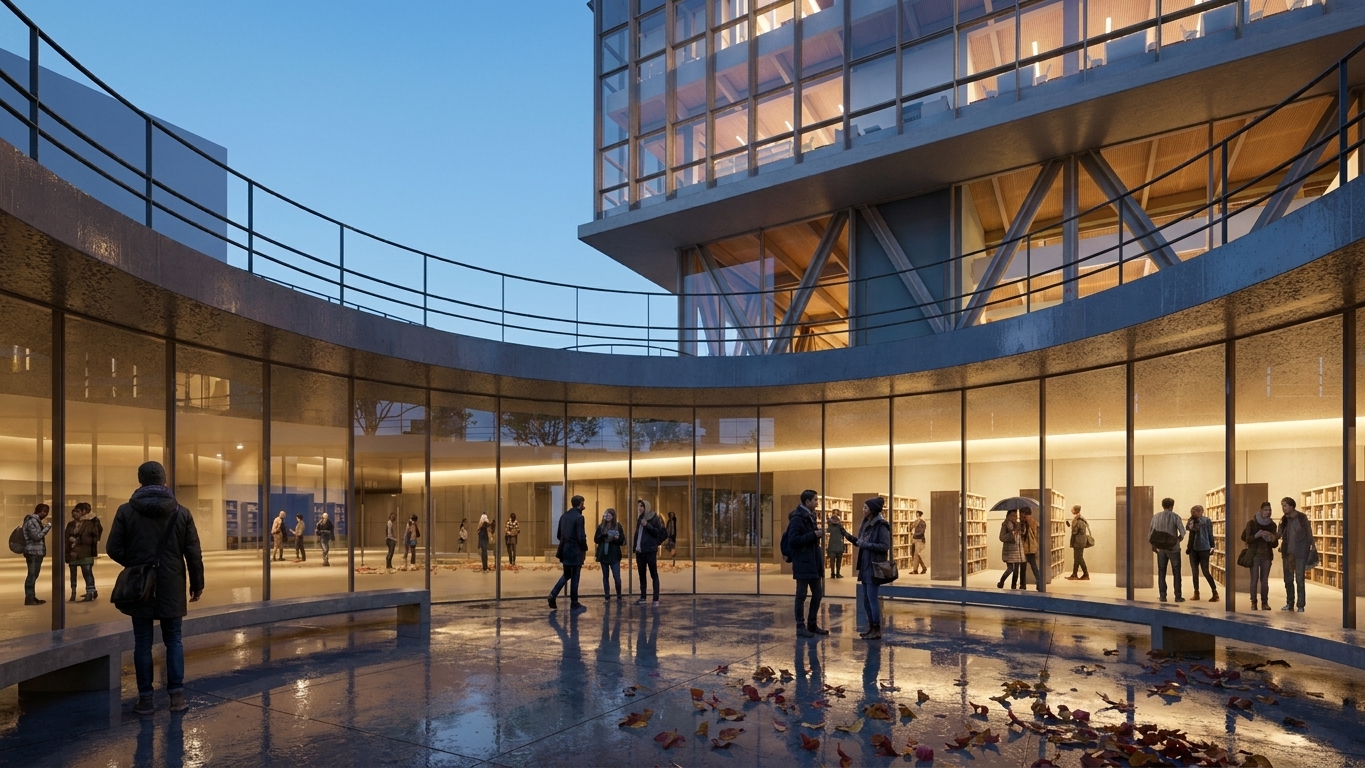
To bring light to the dark areas within the building, a central open space towards the sky has been created, fostering an environment where everyone can work while seeing each other, and various resting corners have been arranged throughout the building.
The library is divided into two areas, a noisy area and a quiet area, to meet the needs of the users. The relationship between these two areas has been a decisive factor in the design.
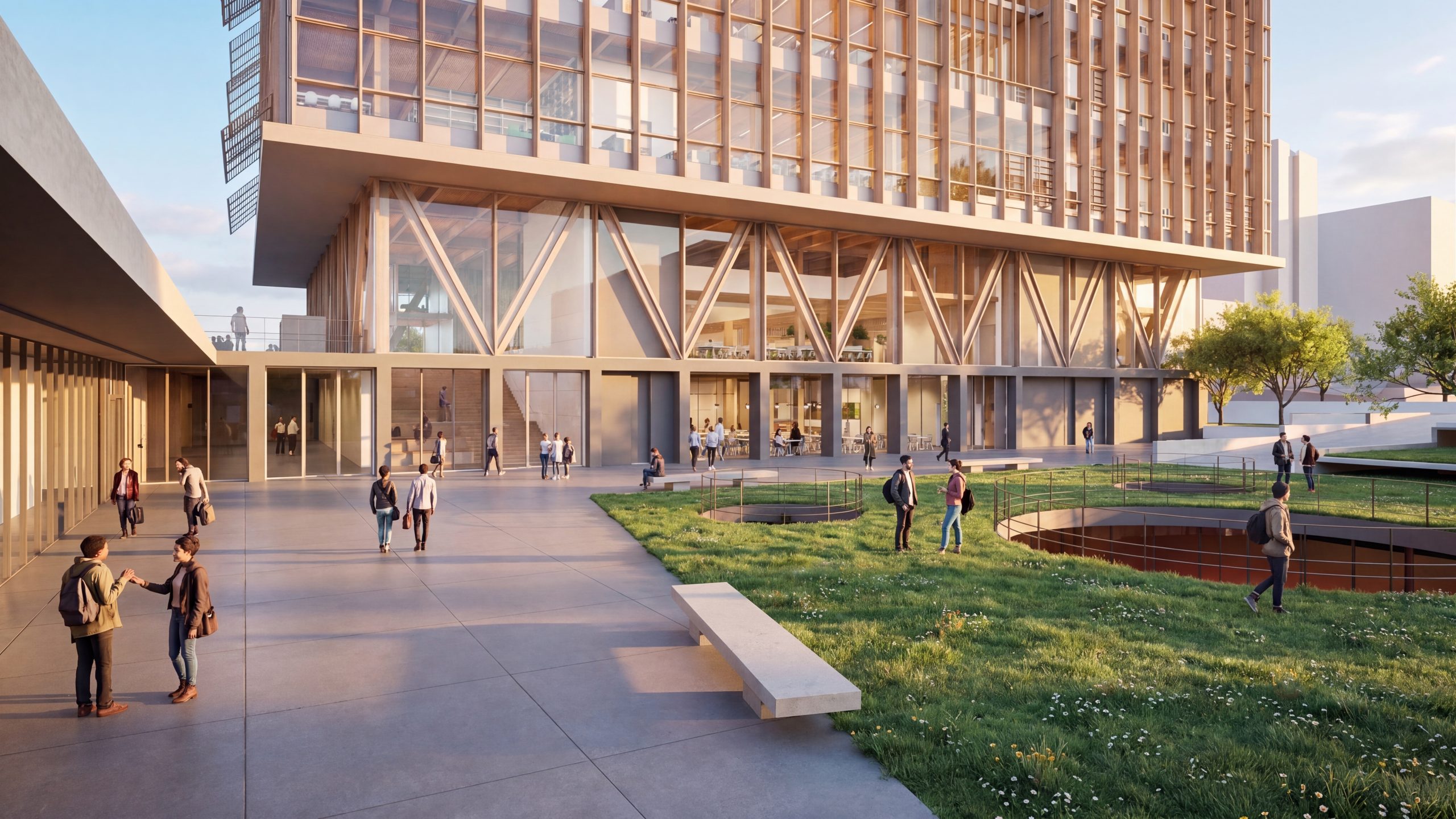
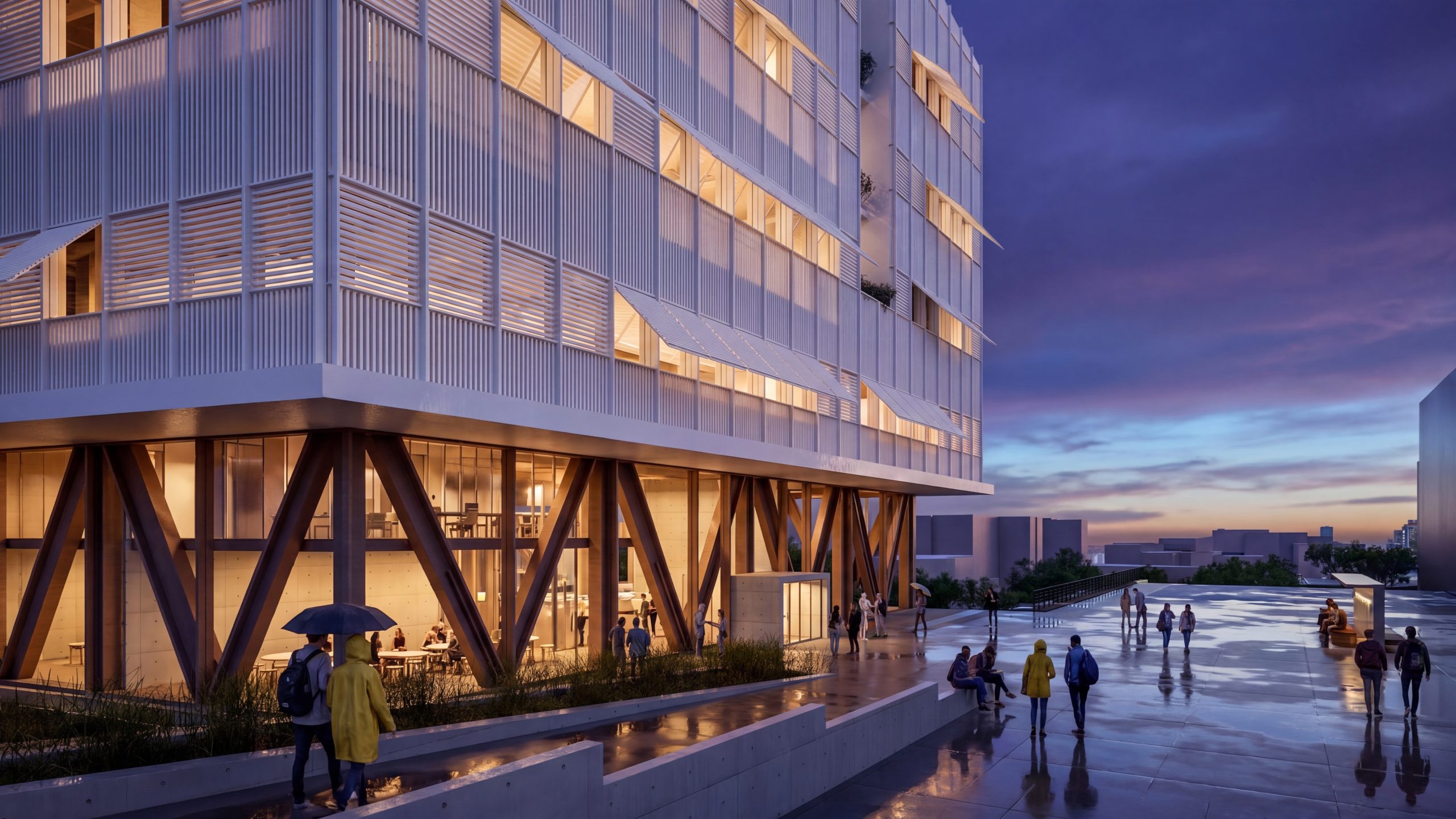
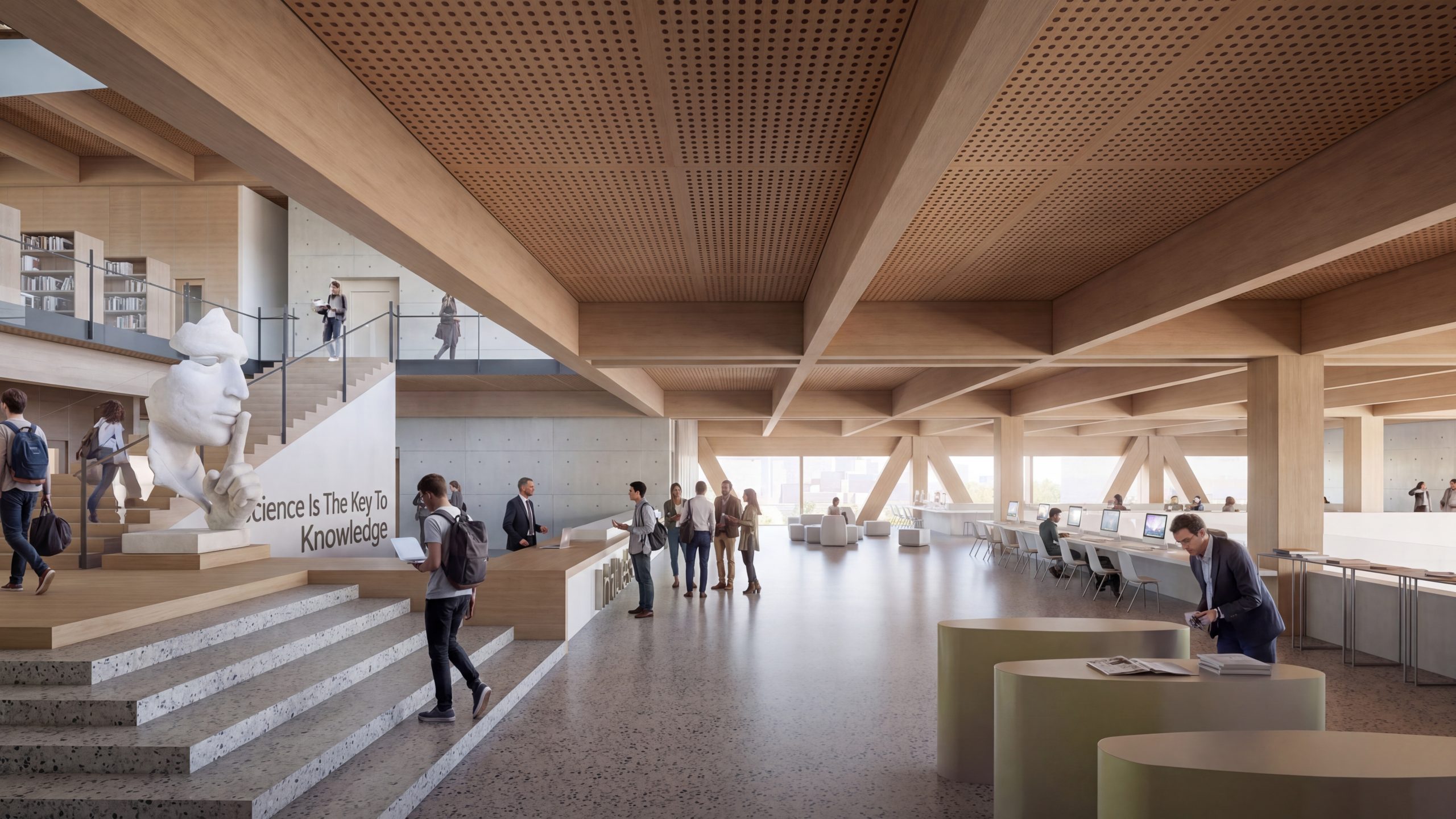
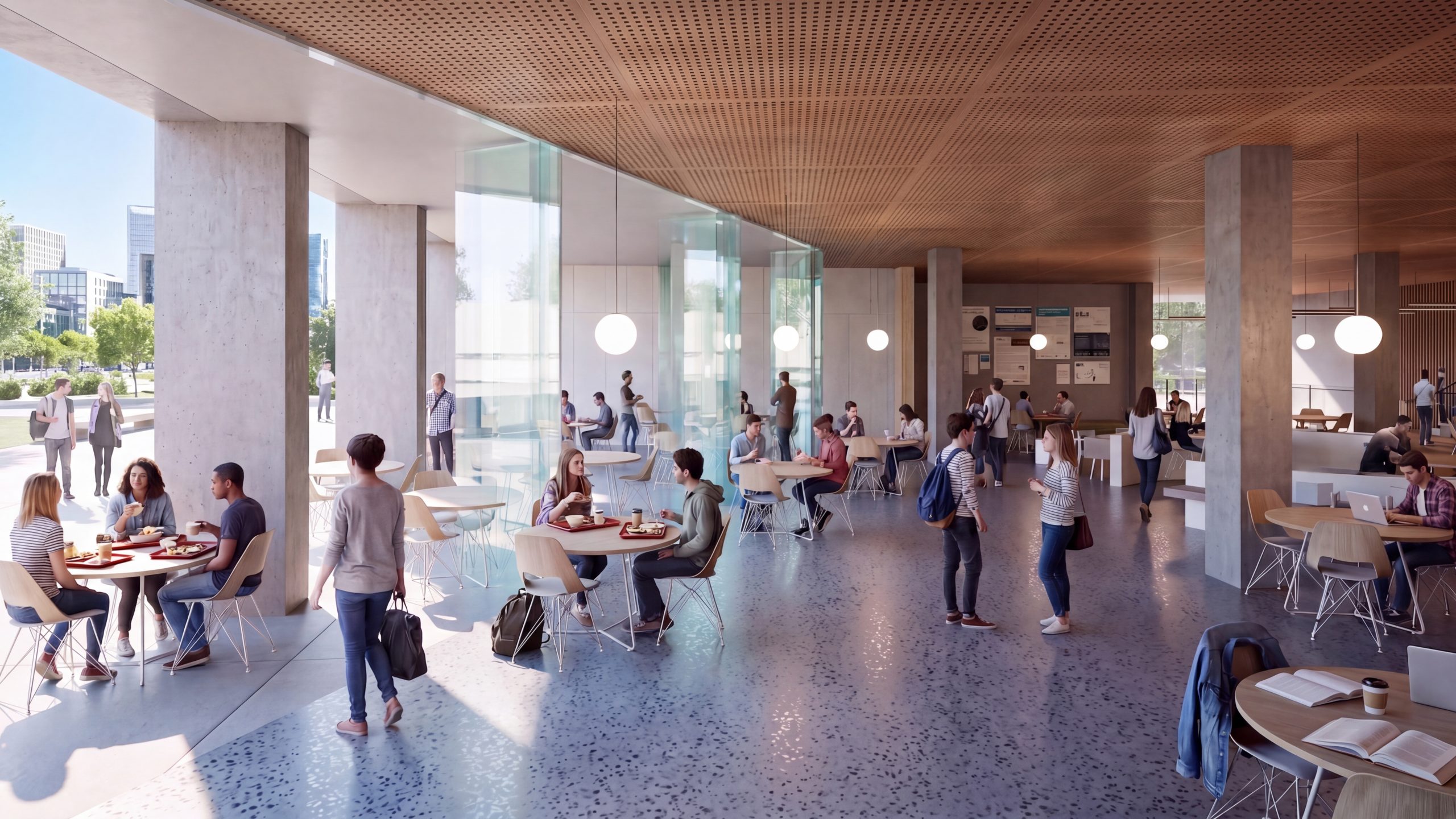
The noisy areas, located in the entrance, mezzanine, and basement, provide services such as information desks, cafeterias, study areas, exhibition spaces, and foyers, allowing for welcoming, meeting, collaborative work, gatherings, rest, and eating/drinking. There is no need to ensure the necessary silence for work in these areas. They are spaces with more movement and a wider variety of users.
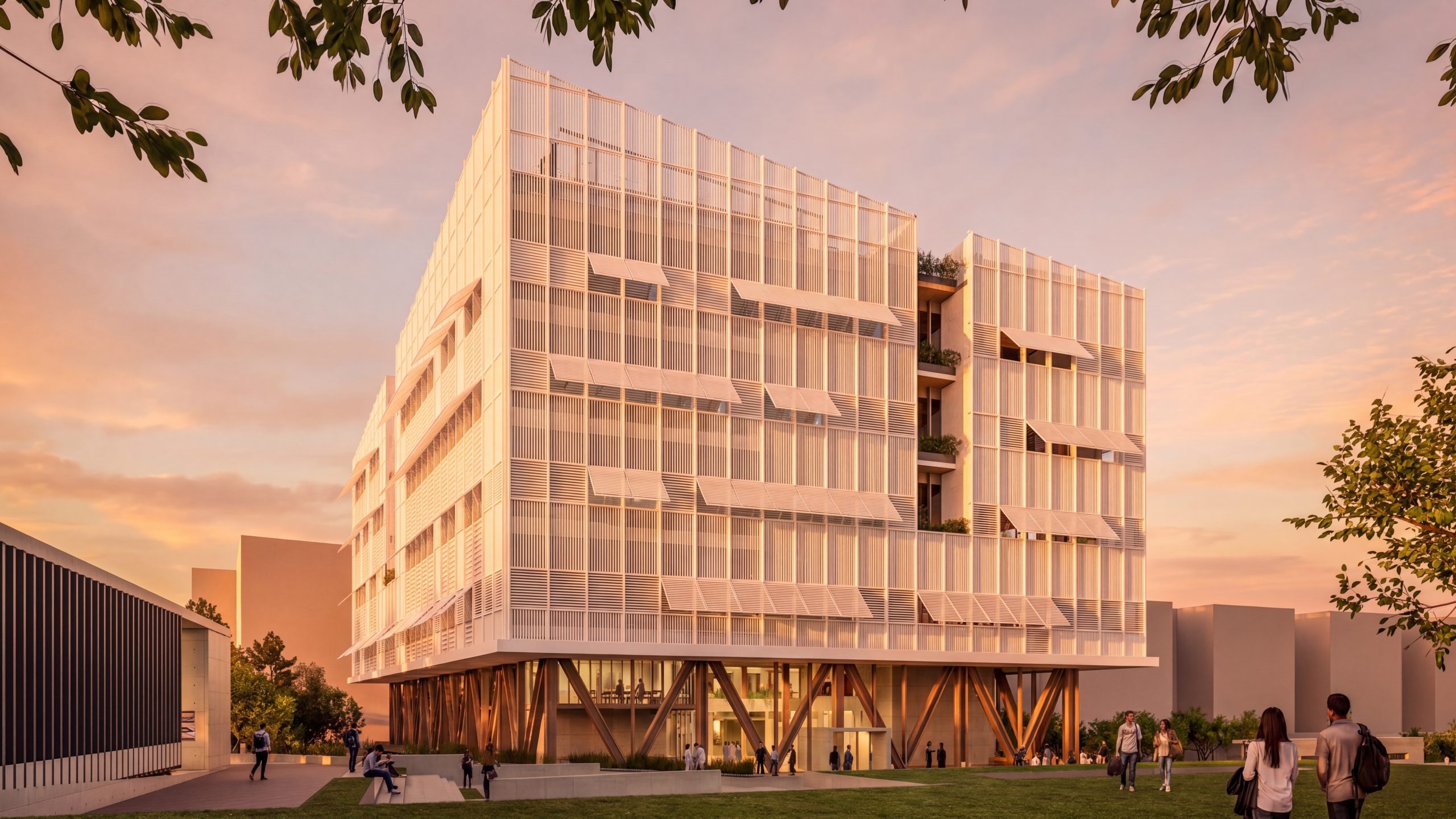
The quiet area of the library is a single space. Rising four stories high, the quiet area is a box-like space created by hollowing out the center, extending from the first floor to the roof level.
Material Palette
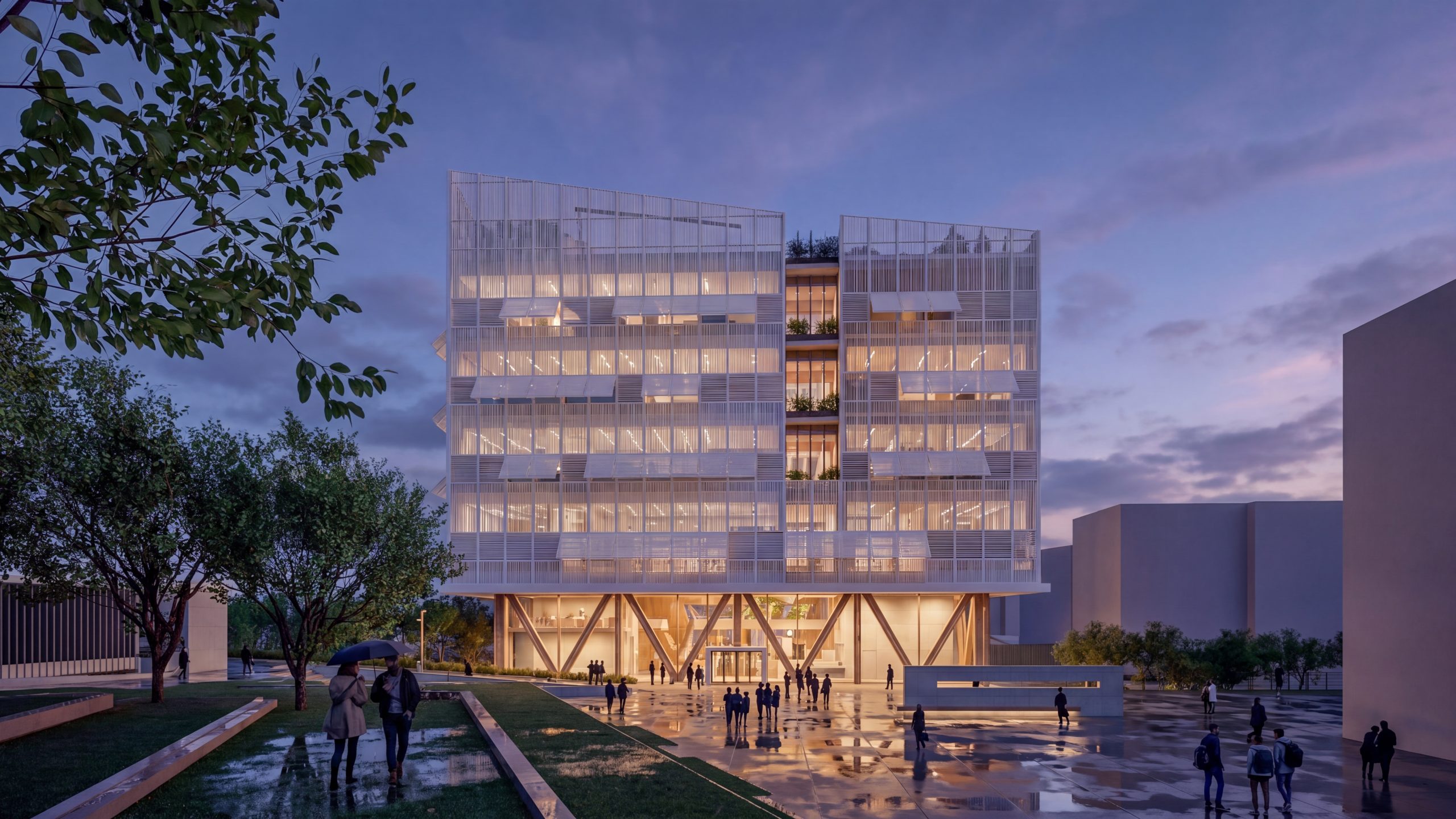
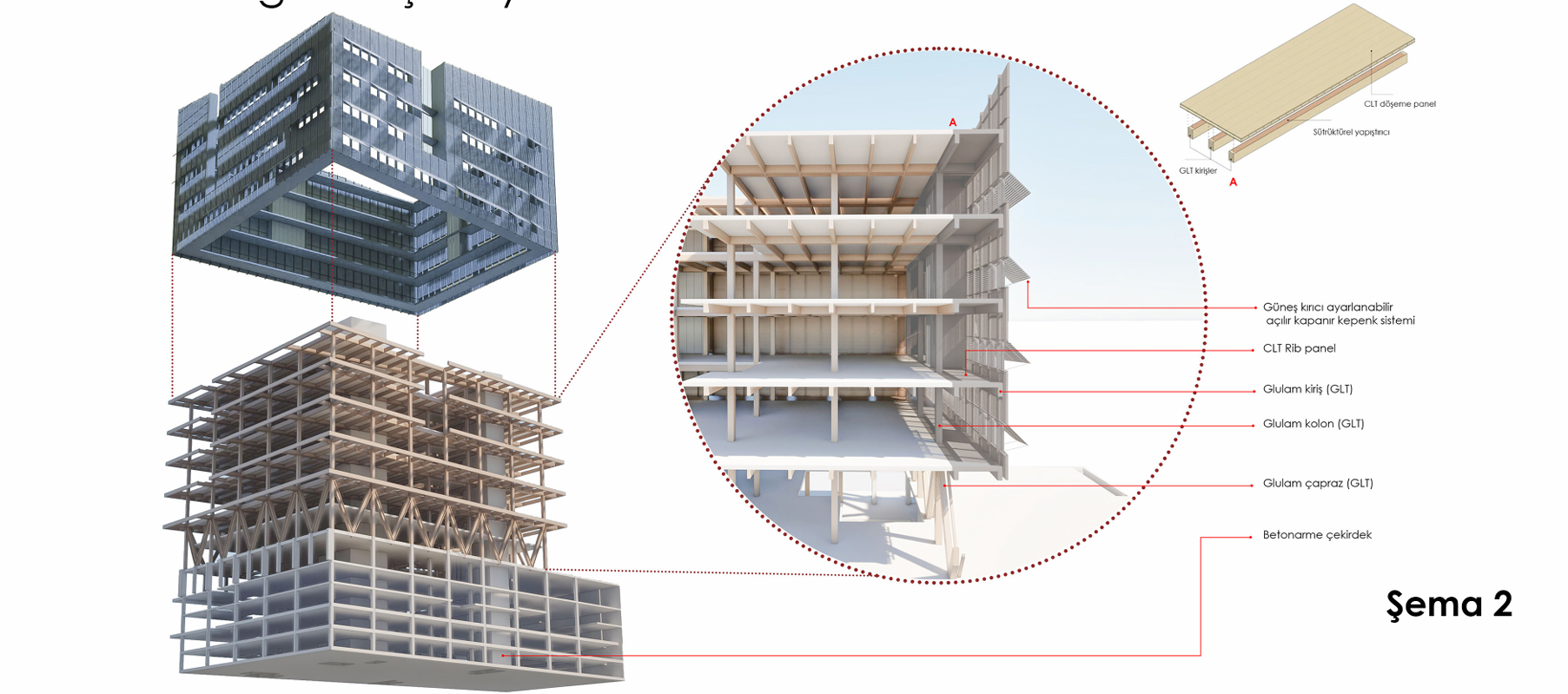
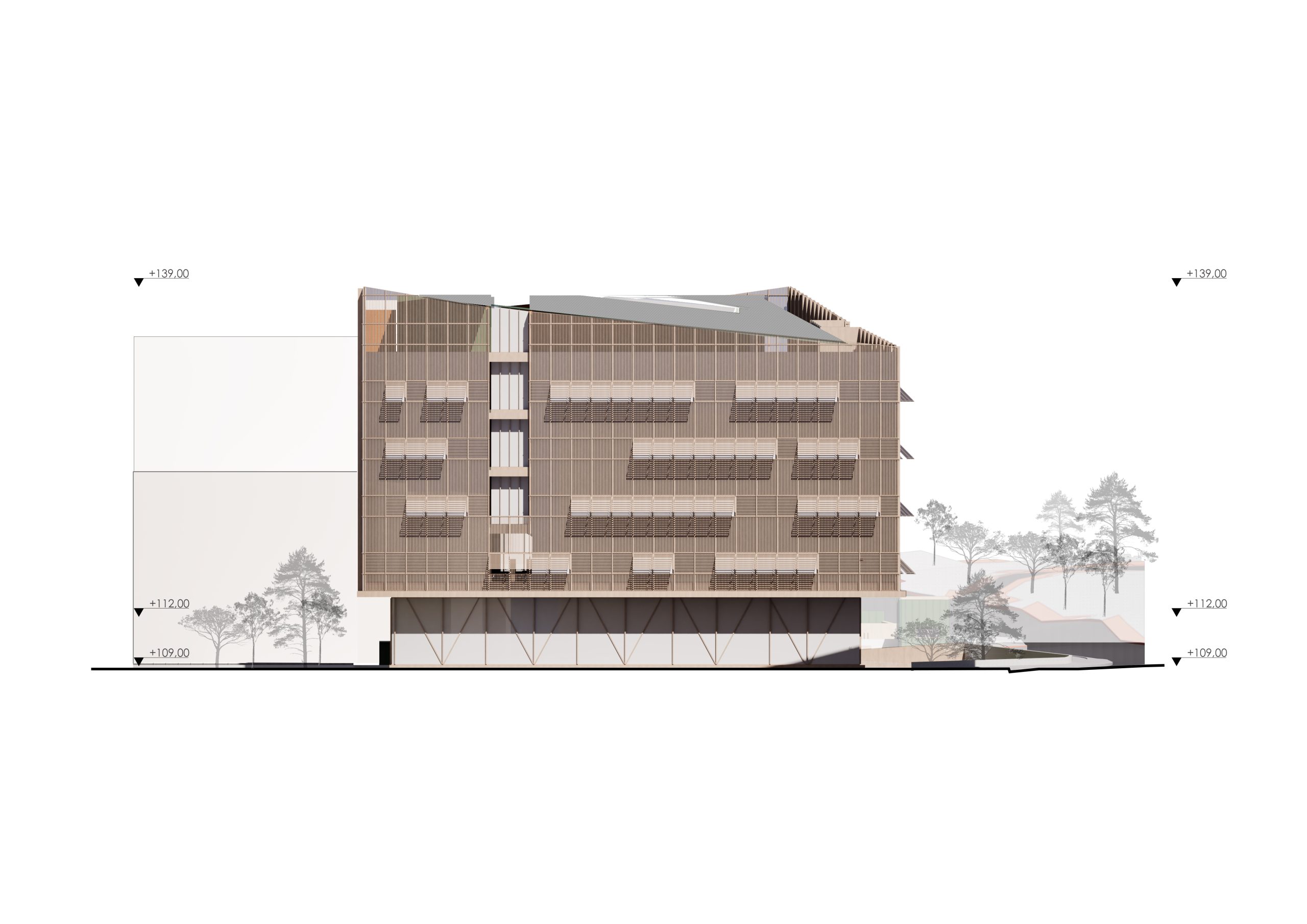
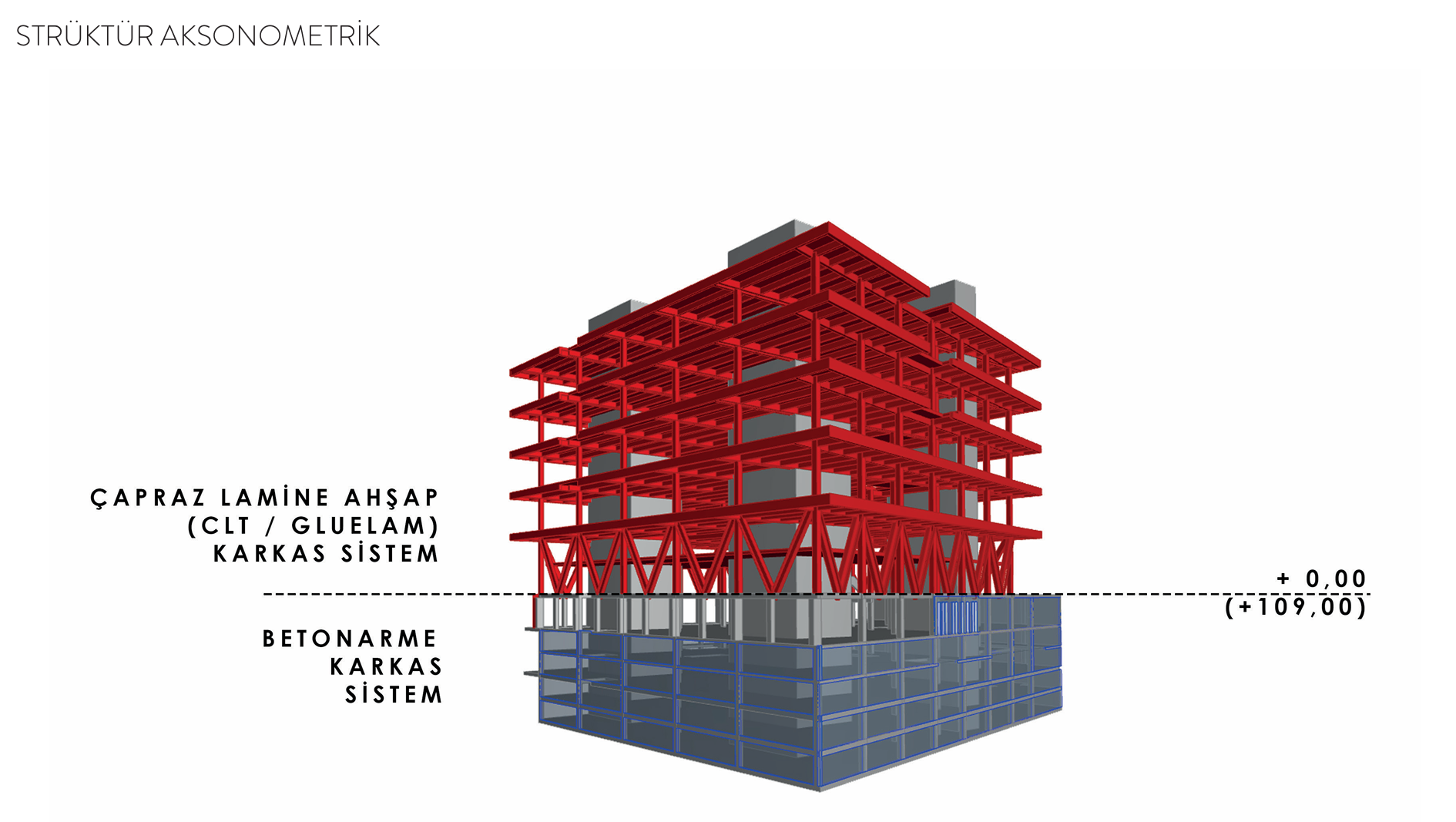
The material palette has been kept very simple: the dominant material is wood, which also forms the building’s load-bearing system. Wooden load-bearing elements and predominantly wooden interior cladding create the building’s identity. In addition to the wooden load-bearing elements contributing to the facade’s identity, the aluminum cladding system and vertical aluminum slats providing sun control define the building’s shell. In the interior spaces, cladding materials will be needed over the wooden load-bearing systems to mitigate fire risk. For floors subject to heavy user traffic, terrazzo cast mosaic is proposed, and for ceilings, a modular gypsum board system is suggested to provide noise control and comfortable acoustics. This system will also facilitate the maintenance and repair of the intensive mechanical systems. The terrazzo cast mosaic is, in a way, a reference to the tile mosaics used in the existing structure.
Landscape
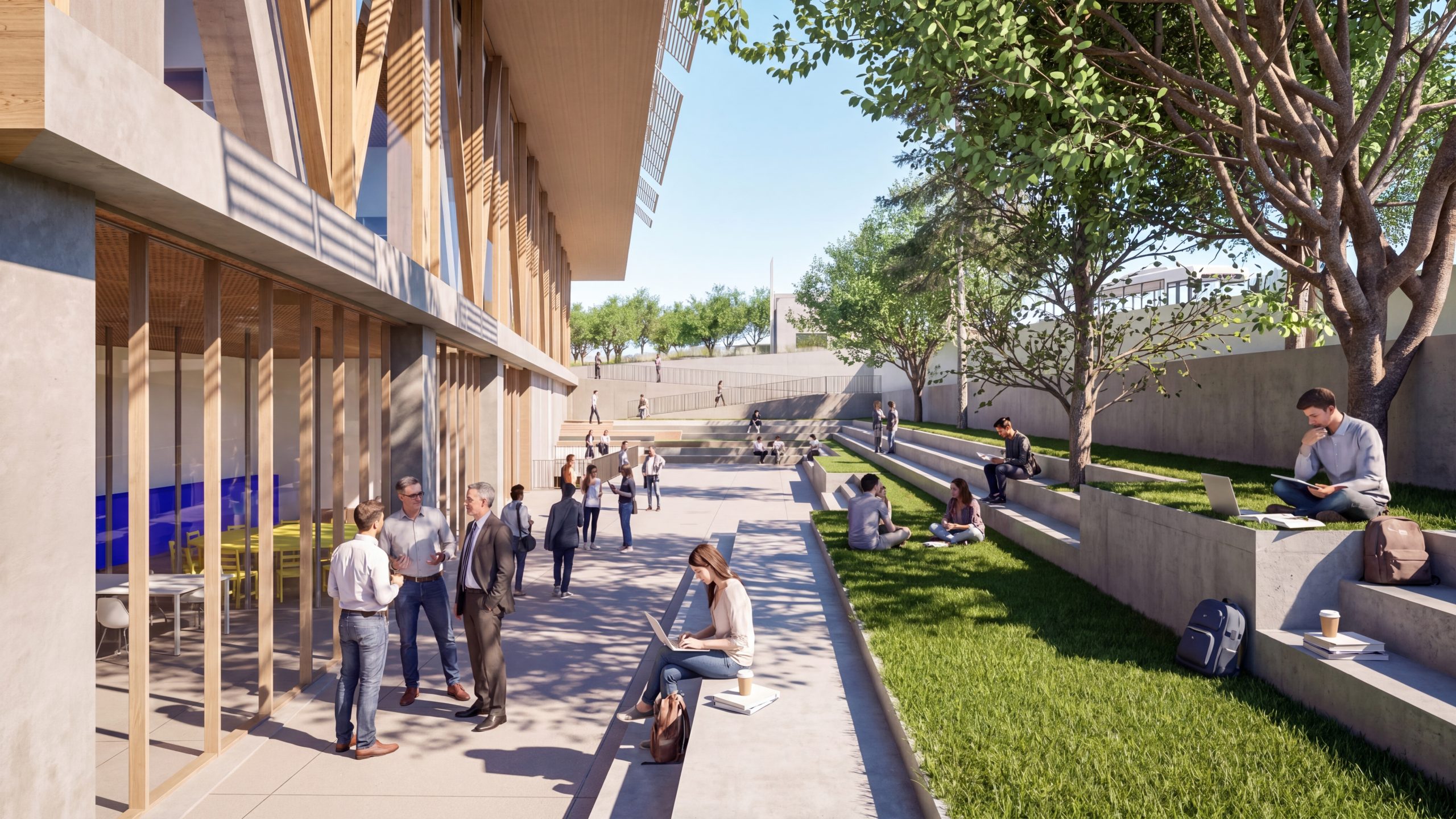
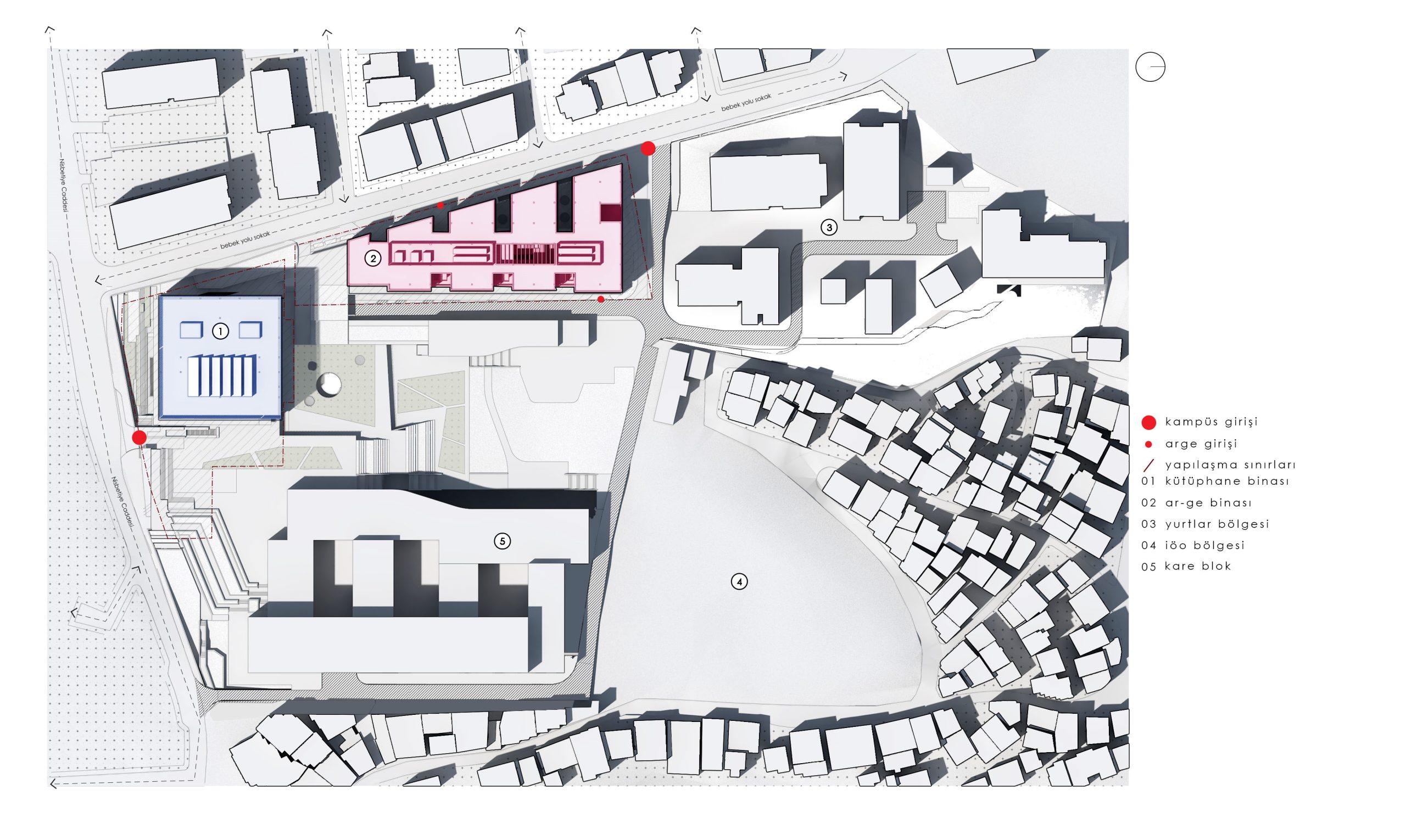
The inward-facing nature of conventional library buildings has changed today; these structures have evolved into buildings that integrate with their surroundings on the ground floors, increasing social interaction. In line with this understanding, a hard landscape proposal has been introduced on the side of the new library mass facing the entrance plateau to enhance the square’s emphasis. The entrance control structure, the library, and the amphitheater steps opposite it define a front square. In accordance with the masterplan decisions, a shaded linear grove entrance, emphasizing the main pedestrian promenade forming the backbone of the campus with a row of trees, connects to the dormitories. The terrace created in front of the cafeteria space, located at the +104.50 elevation and on the north facade, opens onto the park created in front of it, increasing the green areas and resting/meeting spaces that the campus feels are lacking.
On the side of the library facing Nisbetiye Street, an indoor garden has been created at the basement level, providing both natural light and an open-air resting area. All the trees in this area have been preserved.